How Long Does Kombucha Take To Ferment? Complete Timing Guide

One of the most common questions from new kombucha brewers is "How long does kombucha take to ferment?" The answer isn't as straightforward as you might expect. Kombucha fermentation timing depends on multiple factors including temperature, SCOBY health, tea strength, and your personal taste preferences. Understanding these variables will help you brew consistently delicious kombucha every time.
Whether you're brewing your first batch or looking to perfect your timing, this comprehensive guide covers everything you need to know about kombucha fermentation schedules, from the initial 7-14 day first fermentation to the 2-4 day second fermentation for flavoring and carbonation.
- Understanding Kombucha Fermentation Phases
- How Many Days Should I Ferment Kombucha For The First Time?
- If You're Growing A New SCOBY From Store-Bought Kombucha
- If You're A First-Time Brewer With An Established SCOBY
- Factors That Affect Fermentation Time
- Temperature: The Primary Driver
- SCOBY Health And Maturity
- Starter Tea Ratio And Acidity
- Tea Type And Sugar Content
- How To Test If Your Kombucha Is Ready
- Can You Drink Kombucha After First Ferment?
- Seasonal Timing Adjustments
- Troubleshooting Fermentation Timing Issues
- Optimizing Your Fermentation Schedule
- Quick Takeaways
- Frequently Asked Questions
- Conclusion
- References
Understanding Kombucha Fermentation Phases
Kombucha fermentation occurs in distinct phases, each with unique characteristics, timing requirements, and biochemical processes. Understanding these phases helps brewers optimize their timing and achieve consistent results while recognizing the natural variations that make each batch unique.
First Fermentation (F1): The Foundation Stage
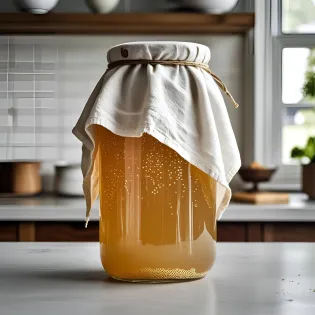
The first fermentation is where the magic begins. During this phase, your SCOBY (including both the starter tea and pellicle if present) works to transform sweet tea into tangy, probiotic-rich kombucha. This process typically takes 7-14 days at room temperature (68-78°F).
During F1, the yeast in your SCOBY consumes the sugar, producing alcohol and carbon dioxide. Simultaneously, beneficial bacteria convert the alcohol into acetic acid and other organic acids, creating kombucha's characteristic tangy flavor. The SCOBY also matures during this time, often forming a new pellicle on the surface.
Typical F1 Timeline:
-
Days 1-3: Initial yeast activity begins, slight fizz develops
-
Days 4-7: Acidity increases, flavor becomes noticeably tangy
-
Days 8-14: Full fermentation, SCOBY thickens, optimal flavor balance
Second Fermentation (F2): Flavoring and Carbonation
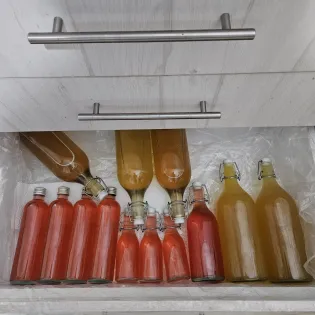
Second fermentation is an optional but popular step where you add flavors and increase carbonation. This anaerobic fermentation typically takes 2-4 days at room temperature in sealed bottles.
During F2, remaining yeasts continue to consume any added sugars from fruits or sweeteners, producing additional carbonation. The sealed environment traps CO2, creating the fizzy texture many kombucha lovers crave. This phase also allows flavors to meld and develop complexity.
Typical F2 Timeline:
-
Day 1: Flavors begin to infuse, minimal carbonation
-
Day 2-3: Optimal flavor development, moderate carbonation
-
Day 4+: Maximum carbonation, risk of over-fermentation
How Many Days Should I Ferment Kombucha for the First Time?
This actually depends on whether you're talking about your first time brewing or if you're using a brand-new SCOBY culture that you grew from store-bought kombucha. Both situations need a bit more patience than regular brewing.
If You're Growing a New SCOBY from Store-Bought Kombucha
Plan on waiting 14-21 days for that first batch. Here's the thing - when you're growing a SCOBY from scratch using store-bought kombucha, it's basically starting from a very small population of bacteria and yeast. It needs time to multiply and get strong enough to ferment a full batch effectively.
Don't panic if nothing seems to happen for the first week or so! New cultures are notoriously slow starters. You might not even see a pellicle forming until day 10-14, which is totally normal. Just be patient and let it do its thing.
If You're a First-Time Brewer with an Established SCOBY
Stick with 10-14 days, even though experienced brewers might finish theirs in 7-10 days. Why the extra time? You're still learning what kombucha should taste like at different stages, and it's better to err on the side of caution.
Use those extra days to taste test (starting around day 8) and really get familiar with how the flavors develop. Plus, longer fermentation gives you a bigger safety buffer - under-fermented kombucha isn't dangerous, but it's not great either.
The Bottom Line:
Whether you're dealing with a new culture or you're new to brewing, patience is your friend. Test the pH if you have strips (aim for 2.5-3.5), but don't stress too much about exact timing. Your taste buds and a little experience will guide you better than any rigid schedule.
Factors That Affect Fermentation Time
Multiple environmental and ingredient factors influence how quickly your kombucha ferments, creating the wide variation in timing that new brewers often find confusing. Understanding these variables allows you to predict fermentation times more accurately and adjust your brewing schedule accordingly.
Temperature: The Primary Driver
Temperature is the most significant factor affecting fermentation speed. Kombucha cultures are most active between 75-85°F, with optimal activity around 78-80°F.
Temperature Guide:
-
65-70°F: Slow fermentation (14-21 days F1, 4-7 days F2)
-
70-75°F: Normal fermentation (10-14 days F1, 3-4 days F2)
-
75-80°F: Fast fermentation (7-10 days F1, 2-3 days F2)
-
80-85°F: Very fast fermentation (5-7 days F1, 1-2 days F2)
-
Above 85°F: Risk of harmful bacteria, SCOBY damage
Temperature Management Tips:
-
Use a heating mat during cold months
-
Keep away from direct sunlight and heat sources
-
Monitor with a stick-on thermometer
-
Consider seasonal timing adjustments
SCOBY Health and Maturity
A healthy, mature SCOBY ferments faster than a new or stressed culture. Well-established SCOBYs have robust populations of beneficial bacteria and yeast, leading to more predictable fermentation times.
SCOBY Health Indicators:
-
Thick, creamy white or light brown colored pellicle
-
Smooth or slightly textured pellicle surface
-
Pleasant yeasty aroma
-
Consistent fermentation patterns
Signs of SCOBY Stress:
-
Very thin or translucent pellicle appearance
-
Black or green spots (possible mold)
-
Extremely slow or stalled fermentation
-
Off odors or flavors
Starter Tea Ratio and Acidity
The amount and acidity of your starter tea significantly impacts fermentation speed. A proper ratio is 10-20% starter tea to total liquid volume, with an ideal pH of 2.5-3.5.
Starter Tea Guidelines:
-
10% ratio: Slower start, longer fermentation
-
15% ratio: Balanced fermentation, recommended for beginners
-
20% ratio: Faster fermentation, shorter timing
pH Impact:
-
Starting pH 4.5+: Very slow or stalled fermentation
-
Starting pH 3.5-4.0: Normal fermentation speed
-
Starting pH 2.5-3.5: Optimal fermentation speed
-
Starting pH below 2.5: May inhibit fermentation
Tea Type and Sugar Content
Different teas and sugar types affect fermentation timing. Black tea provides the most nutrients for SCOBY growth, while green tea offers antioxidants but may slow fermentation slightly.
Tea Fermentation Speed:
-
Black tea: Fastest fermentation (7-10 days)
-
Black/green blend: Moderate speed (8-12 days)
-
Green tea: Slightly slower (10-14 days)
-
White tea: Slowest (12-16 days)
Sugar Impact:
-
White sugar: Standard fermentation speed
-
Raw cane sugar: Slightly faster due to minerals
-
Coconut sugar: Slower fermentation, unique flavor
-
Honey: Much slower, requires adaptation period
How to Test if Your Kombucha is Ready
Determining optimal fermentation completion requires combining sensory evaluation with understanding your personal taste preferences and brewing goals. Learning to recognize the signs of proper fermentation ensures consistent quality and helps prevent both under-fermentation and over-fermentation issues.
Taste Testing: The Primary Method
The most reliable way to determine fermentation completion is taste testing. Start testing after day 5 for experienced brewers or day 7 for beginners.
Flavor Development Stages:
-
Too sweet: Needs more time, yeast activity incomplete
-
Balanced sweet-tart: Perfect for most palates, good stopping point
-
Very tart: Fully fermented, may be too acidic for some
-
Vinegary: Over-fermented but still usable, good for starter tea
Tasting Safety Tips:
-
Use a clean spoon for each taste
-
Never double-dip into the main batch
-
Trust your taste buds over arbitrary timelines
-
Document preferences for future batches
pH Testing for Precision
pH meters or strips provide objective fermentation measurements. Properly fermented kombucha should have a pH between 2.5-3.5.
pH Fermentation Guide:
-
4.5+: Not ready, continue fermenting
-
3.5-4.0: Early fermentation, approaching readiness
-
2.5-3.5: Properly fermented, safe to drink
-
Below 2.5: Very acidic, may be over-fermented
Visual and Aromatic Cues
Experienced brewers often recognize fermentation completion through visual and aromatic indicators.
Visual Signs of Completion:
-
New SCOBY pellicle formation on surface
-
Cloudy starter tea becomes clearer
Aromatic Indicators:
-
Sweet smell diminishes significantly
-
Pleasant tangy aroma develops
-
Yeasty fermentation odors decrease
-
Balanced, refreshing scent
Can You Drink Kombucha After First Ferment?
Yes, you can absolutely drink kombucha after the first fermentation is complete. In fact, many kombucha enthusiasts prefer the clean, straightforward flavor of first fermentation kombucha without any additional flavoring or carbonation from second fermentation.
First Fermentation Kombucha Characteristics:
- pH level: Between 2.5-3.5, indicating safe acidity levels
- Flavor profile: Balanced sweet-tart taste with tea undertones
- Carbonation: Light natural fizz from primary fermentation
- Probiotic content: Full complement of beneficial bacteria and yeast
- Safety: Completely safe when properly fermented and tested
Benefits of Drinking After F1:
- Pure flavor: Experience the authentic taste of kombucha without additives
- Lower sugar: No additional sugars from fruits or flavorings
- Immediate consumption: No waiting for second fermentation
- Stable shelf life: Less risk of over-carbonation or bottle pressure issues
When F1 Kombucha is Ready to Drink:
- Taste test shows balanced sweet-tart flavor (not overly sweet)
- pH meter reads between 2.5-3.5
- Fermentation time of at least 7-10 days at proper temperature
- Pleasant, tangy aroma without off-odors
Many commercial kombuchas are essentially first fermentation products that have been flavored and carbonated through different methods. Drinking F1 kombucha is traditional, safe, and often preferred by those who enjoy kombucha's natural complexity.
Seasonal Timing Adjustments
Seasonal temperature fluctuations significantly impact kombucha fermentation timing, requiring brewers to adapt their schedules and monitoring practices throughout the year. Understanding these patterns helps maintain consistent quality regardless of weather conditions and prevents seasonal brewing frustrations.
Summer Brewing (High Temperatures)
Hot weather accelerates fermentation significantly. Summer batches often complete F1 in 5-7 days and F2 in 1-2 days.
Summer Strategies:
-
Check batches daily after day 4
-
Consider cooler locations (basements, north-facing rooms)
-
Reduce starter tea slightly to slow fermentation
-
Monitor carbonation closely during F2
-
Use ice packs if temperatures exceed 85°F
Winter Brewing (Low Temperatures)
Cold weather slows fermentation considerably. Winter batches may take 14-21 days for F1 and 4-7 days for F2.
Winter Solutions:
-
Use heating mats or warm locations
-
Increase starter tea ratio slightly
-
Consider seed heating mats (maintain 75-80°F)
-
Extend expected timelines
-
Monitor for stalling or mold development
Spring and Fall Optimization
Moderate temperatures in spring and fall often provide ideal brewing conditions with consistent 7-14 day F1 cycles.
Transitional Season Tips:
-
Expect timing variations as weather changes
-
Adjust heating/cooling gradually
-
Perfect time for establishing new SCOBYs
-
Ideal for experimenting with timing preferences
Troubleshooting Fermentation Timing Issues
When fermentation doesn't proceed as expected, identifying and addressing the underlying causes quickly prevents batch loss and maintains SCOBY health. These troubleshooting strategies help diagnose timing problems and implement effective solutions for consistent brewing success.
Slow or Stalled Fermentation
When fermentation takes significantly longer than expected, several factors may be at play.
Common Causes:
-
Temperature too low (below 68°F)
-
Insufficient starter tea or low acidity
-
Weak or unhealthy SCOBY
-
Contaminated brewing environment
-
Wrong tea or sugar type
Solutions:
-
Increase temperature gradually
-
Add more acidic starter tea
-
Use a SCOBY hotel backup
-
Improve sanitation practices
-
Switch to black tea temporarily
Over-Fast Fermentation
Extremely rapid fermentation can result in overly acidic kombucha or incomplete flavor development.
Causes of Rapid Fermentation:
-
Temperature too high (above 80°F)
-
Excessive starter tea
-
Very active SCOBY
-
High ambient humidity
Corrective Measures:
-
Move to cooler location
-
Reduce starter tea ratio
-
Divide SCOBY for multiple batches
-
Monitor more frequently
Inconsistent Batch Timing
When fermentation timing varies significantly between batches, environmental factors are usually responsible.
Consistency Strategies:
-
Maintain stable temperature and location
-
Use consistent ratios and ingredients
-
Document successful timing patterns
-
Create standard operating procedures
-
Monitor seasonal adjustments needed
Optimizing Your Fermentation Schedule
Developing a consistent fermentation schedule maximizes efficiency, ensures fresh kombucha availability, and helps predict when each batch will be ready. Strategic planning transforms chaotic brewing into a smooth, predictable process that fits seamlessly into your lifestyle.
Creating a Brewing Calendar
Successful kombucha brewers often maintain fermentation calendars to track timing patterns and optimize schedules.
Calendar Elements:
-
Start dates and projected completion
-
Temperature ranges during fermentation
-
Taste test results and pH readings
-
Seasonal timing adjustments
-
Successful flavor combinations
Continuous Brew Method Timing
Continuous brew systems have different timing considerations since you're harvesting portions while maintaining ongoing fermentation.
Continuous Brew Schedule:
-
Initial establishment: 14-21 days
-
Regular harvesting: Every 7-14 days
-
SCOBY maintenance: Monthly evaluation
-
Fresh tea additions: As needed for harvest volume
Multiple Batch Management
Managing several batches allows for continuous kombucha supply and timing optimization.
Multi-Batch Strategy:
-
Stagger start dates by 3-4 days
-
Maintain consistent environmental conditions
-
Use separate containers for different experiments
-
Document which timing produces preferred flavors
Quick Takeaways
• Standard timing: 7-14 days for first fermentation, 2-4 days for second fermentation at 68-78°F
• Temperature is king: Every 5°F change can alter timing by 2-3 days
• Taste testing beats timelines: Your palate is the best indicator of fermentation completion
• SCOBY health matters: Healthy cultures ferment faster and more consistently
• Seasonal adjustments required: Summer speeds up, winter slows down fermentation significantly
• pH testing adds precision: Target 2.5-3.5 pH for properly fermented kombucha
• Document your patterns: Track successful timing for consistent future batches
Frequently Asked Questions
Can I speed up kombucha fermentation safely?
Yes, you can safely accelerate fermentation by increasing temperature to 78-80°F, using more starter tea (up to 20% of total volume), or adding additional SCOBY culture from your SCOBY hotel. Avoid exceeding 85°F as this risks harmful bacteria growth and SCOBY damage.
What happens if I ferment kombucha too long?
Over-fermented kombucha becomes increasingly acidic and vinegary. While still safe to drink, it may be too tart for most palates. Over-fermented kombucha works excellently as starter tea for future batches or can be used in salad dressings and marinades.
How do I know if my kombucha fermentation has stalled?
Stalled fermentation shows no flavor change after 14+ days, maintains sweet taste, lacks pellicle growth, and may develop off odors. Check temperature, starter tea acidity, and SCOBY health. Consider adding more starter tea (acidic liquid from a previous batch) or moving to a warmer location.
Is it safe to taste kombucha during fermentation?
Yes, tasting during fermentation is safe and recommended starting around day 5-7. Always use a clean spoon and avoid contaminating the main batch. This helps you learn your preferred flavor profile and timing.
Can cold weather kill my SCOBY and stop fermentation?
Cold temperatures (below 60°F) don't kill healthy SCOBYs but put them into dormancy, effectively stopping fermentation. Prolonged cold exposure may weaken the culture. Use heating mats or move to warmer locations during winter brewing.
Conclusion
Mastering kombucha fermentation timing transforms your brewing from guesswork into a reliable, enjoyable process. While standard guidelines suggest 7-14 days for first fermentation and 2-4 days for second fermentation, your specific timing depends on temperature, SCOBY health, and personal taste preferences.
Remember that consistency comes from controlling variables: maintain stable temperatures, use proper ratios, and document what works for your setup. Seasonal adjustments are normal – embrace the slower winter ferments and watch carefully during hot summer brewing.
Start with taste testing as your primary indicator, supplemented by pH measurements for precision. Trust your palate over rigid timelines, and don't be afraid to adjust based on your preferences. Whether you prefer a mild, slightly sweet kombucha or a bold, tangy brew, understanding fermentation timing gives you complete control over your final product.
Ready to perfect your timing? Start your next batch with these guidelines, document your results, and build a fermentation schedule that works for your lifestyle and taste preferences. For more detailed brewing techniques, check out our complete beginner's brewing guide.
References
-
McGinn, K. & Newman, P. (2022). "Fermentation Kinetics in Kombucha Production." Journal of Applied Microbiology, 133(4), 2156-2168.
-
Chakravorty, S., et al. (2021). "Temperature Effects on Kombucha SCOBY Metabolism and Product Quality." Food Microbiology, 95, 103-115.
-
Villarreal-Soto, S.A., et al. (2020). "Understanding Kombucha Tea Fermentation: A Review." Journal of Food Science, 85(3), 580-588.
-
Jayabalan, R., et al. (2019). "Biochemical Characteristics of Kombucha Produced Using Different Tea Sources and Fermentation Times." Food Chemistry, 275, 398-407.
What timing challenges have you experienced with your kombucha brewing? Share your fermentation schedule discoveries in the comments below, and don't forget to share this guide with fellow brewers who might be struggling with timing their batches!